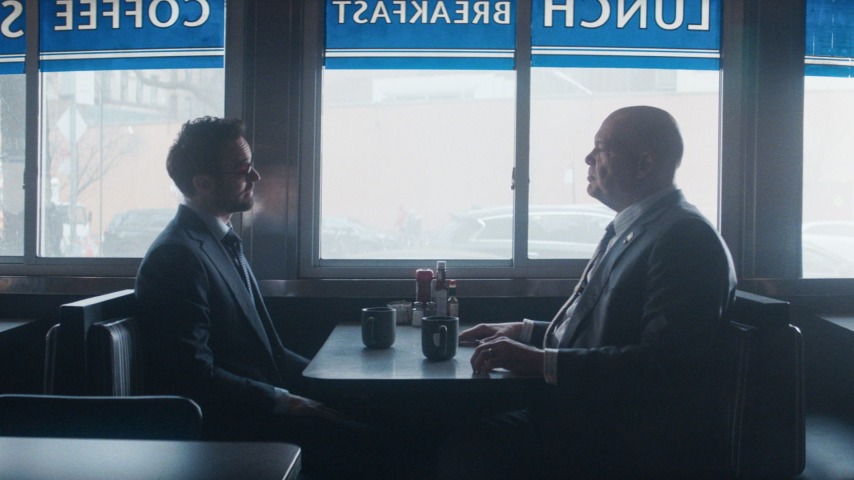
The return of the Man Without Fear in Daredevil: Born Again has been one of the most anticipated events in the Marvel Cinematic Universe (MCU). Yet, its journey to the screen has been anything but smooth, marked by significant creative overhauls that threatened to derail its promise. From the ashes of production challenges, however, has emerged a series of Daredevil: Born Again episodes that largely transcend their turbulent origins, delivering a compelling narrative that ranges from good to truly "God-tier." This article delves into how the show navigates this creative chaos, its profound thematic relevance, and what makes these long-awaited episodes a must-watch.
The Kingpin's Political Ascent: A Mirror to Our World in Early Daredevil Born Again Episodes
One of the most striking aspects of the initial Daredevil: Born Again episodes is the chillingly familiar political landscape they present. The notorious crime lord Wilson Fisk, played with menacing subtlety by Vincent D'Onofrio, has shed his villainous persona – at least publicly – to become the newly elected mayor of New York City. This premise isn't just a clever plot device; it's a stark reflection of real-world societal trends where, as the creators Dario Scardapane, Matt Corman, and Chris Ord insightfully observe, "most people have decided to give power to criminals, psychopaths, or idiots."
Fisk's transformation into a public servant is a masterclass in political maneuvering and self-deception. He genuinely insists he has changed, seeking to be known as Wilson Fisk, the savior of New York, rather than the Kingpin. We see him attending therapy sessions with his wife, meticulously cultivating a public image of a man dedicated to civic duty – even stopping his car to personally instruct workers to fill a pothole, earning the cheers of onlookers. D'Onofrio's portrayal captures this duality perfectly; a single smile reveals the self-satisfied narcissist beneath the veneer of public service, a man who believes himself "the Chosen One."
The show doesn't shy away from portraying the public's willingness to believe in him, despite his known past. The citizens of MCU's New York, much like their real-world counterparts, are desperate for a perceived fixer, electing a man whose history is synonymous with crime. This narrative thread is not only central to the tension in Daredevil: Born Again episodes but also serves as a powerful commentary on our contemporary political climate. How can a society, aware of a figure's criminal past, still empower them? It’s a question that reverberates beyond the screen. For a deeper dive into this compelling political narrative, explore Daredevil Born Again: Mayor Kingpin's Political Play & Real-World Echoes.
Matt Murdock's Dual Identity: Lawyer vs. Vigilante
While Fisk embraces a new public identity, Matt Murdock (Charlie Cox) grapples with his own. The early Daredevil: Born Again episodes find Matt determined to serve New York as a lawyer, driven by a profound personal tragedy involving the death of a friend. This decision marks a conscious effort to channel his desire for justice through legal channels, believing in the system he has sworn to uphold.
However, the world of Hell's Kitchen rarely allows for such clear-cut choices. Even as Matt tries to leave the mask behind, the systemic injustices he encounters constantly test his resolve. A pivotal moment early in the series, such as a judge's swift denial of bail to Hector Ayala (Kamar de los Reyes) without proper hearing, starkly illustrates the law's limitations. These frustrations highlight the inherent conflict within Matt: can the law truly bring justice, or will the darkness of the city always demand the Daredevil?
Visually, the series wastes no time in reminding viewers of its combat prowess. The first episode features an action sequence that showcases the show's signature choreography, a "primary attraction" that fans have always celebrated. Matt's decision to temporarily cast aside the mask after this brutal encounter signifies his attempt to shed the vigilante persona. Yet, as the narrative progresses, particularly towards the end of the second episode, circumstances inevitably push him back into the cowl. This internal struggle is a cornerstone of his character, making the moments when he finally dons the suit again incredibly impactful. The constant push and pull between his life as Matt Murdock, attorney-at-law, and Daredevil, the masked vigilante, forms the emotional core of many Daredevil: Born Again episodes. For more on this internal battle, read Matt Murdock's Dilemma: Lawyer or Vigilante in Born Again?
Creative Overhauls and the "Frankenstein's Monster" Season
The journey of Daredevil: Born Again episodes to the screen was far from linear. The series notoriously underwent a complete creative overhaul midway through production. This meant rewrites, reshoots, and a significant re-evaluation of its direction. Such a drastic measure can often result in a disjointed, unwatchable mess, leading to a "Frankenstein's monster" of a season pieced together from different visions.
Indeed, this production turbulence did lead to some initial "lack of cohesion week-to-week," as acknowledged by early viewers. The narrative might occasionally feel like it's shifting gears or trying to reconcile different creative impulses. However, what is truly remarkable is how the series, despite these challenges, manages to triumph. The collective strength of the acting, the commitment to character, and the inherent gravitas of the Daredevil universe allow it to deliver a majority of episodes that "range from good to God-tier."
Even an episode deemed "lackluster" by some, such as "With Interest" (Episode Five), is still praised as being "better than 90% of other shows on television." While it might be more episodic in nature – focusing on Matt using his superhuman abilities to stop a bank heist, for instance – it still showcases the series' ability to deliver engaging content, even outside the main plot. This resilience in storytelling, managing to produce compelling Daredevil: Born Again episodes despite the internal turbulence, speaks volumes about the creative team's ability to adapt and refocus.
Analyzing Key Daredevil Born Again Episodes: Strengths and Nuances
So, what elevates many of the Daredevil: Born Again episodes to "God-tier" status, even after such a chaotic production? It lies in several key areas:
- Character Depth: The series continues to excel at portraying the complex inner lives of its characters. Matt's moral dilemmas, Fisk's chilling ambition, and the nuanced performances by Charlie Cox and Vincent D'Onofrio are consistently engaging. Every facial expression, every subtle gesture, deepens our understanding of these iconic figures.
- Action Choreography: As mentioned, the combat sequences remain a strong point. The fights are brutal, visceral, and expertly staged, making them a primary draw for fans. These aren't just spectacles; they are extensions of the characters' resolve and desperation.
- Thematic Relevance: The show’s willingness to tackle real-world political and societal problems gives it a weighty relevance. It explores themes of justice, corruption, public perception, and the nature of good and evil in a way that resonates deeply with contemporary audiences.
- Emotional Impact: Despite any structural inconsistencies, the emotional beats land powerfully. Whether it's Matt mourning a loss or Fisk struggling to maintain his facade, the series connects with viewers on a profound level.
- World-Building: The series efficiently reintroduces and expands the Daredevil universe within the MCU, grounding it in a gritty, street-level reality that distinguishes it from other Marvel properties.
The triumph of Daredevil: Born Again is its ability to overcome its tumultuous gestation period. Instead of being defined by its creative struggles, many of the individual Daredevil: Born Again episodes stand on their own as compelling narratives, demonstrating that even a "Frankenstein's monster" can have moments of profound beauty and thrilling action. The range of quality, from solid to exceptional, showcases a series that found its footing and delivered on its promise, proving that art can indeed imitate life, and sometimes, even chaotic life can lead to extraordinary art.
Conclusion
The journey of Daredevil: Born Again episodes from a troubled production to critical acclaim is a testament to the enduring power of its characters and themes. What could have been a cautionary tale of creative interference has instead become a compelling narrative of resilience, both on-screen and behind the scenes. By delving into the political machinations of Kingpin and the moral quandaries of Matt Murdock, the series not only entertains but also forces us to reflect on our own world. The early episodes set a powerful tone, and despite the "creative chaos" that plagued its development, Daredevil: Born Again ultimately delivers a collection of episodes that reaffirm its place as a "God-tier" entry in the superhero genre, proving that true quality can indeed rise above any challenge.